
LEC Versus Won't Return in 2027: Inside EMEA's Closing Tier-2 Ladder
**মূল উত্তর** LEC Versus ২০২৭ সালে ফিরবে না। LEC কমিশনার জানিয়েছেন, Riot এখন মূল LEC এবং তার বিদ্যমান দলগুলোর দিকে মনোযোগ দেবে, ফলে EMEA-র টিয়ার-২ দলগুলোর বিরল টিয়ার-১ মঞ্চটি বন্ধ হয়ে যাচ্ছে। **মূল তথ্য** - LEC Versus ছিল টিয়ার-২ (ERL) দলগুলোর সঙ্গে টিয়ার-১ LEC দলের বিরল প্রতিদ্বন্দ্বিতার ইভেন্ট। - LEC কমিশনার নিশ্চিত করেছেন, ইভেন্টটি ২০২৭ সালের ক্যালেন্ডারে ফিরবে না। - কো-স্ট্রিমিংকে “বড় বাজি” বলা হয়েছে; ৫টি চ্যানেলের বদলে ৫০–৬০টি চ্যানেল পরিচালনার চাপ স্বীকার করা হয়েছে। - ভবিষ্যতের রোড ট্রিপ ও স্প্লিটের সূচি নিয়ে প্রো দলগুলোর সঙ্গে ঘনিষ্ঠ সমন্বয়ের প্রতিশ্রুতি দেওয়া হয়েছে। - আচরণে “স্বাগতপূর্ণ ও সম্মানজনক” পরিবেশ এবং খেলোয়াড়ের “প্যাশন” — দুইয়ের ভারসাম্যের কথা বলা হয়েছে। **সূত্র** Esports Insider-এ প্রকাশিত LEC কমিশনার Bykov-এর সাক্ষাৎকার (Esports Insider, ২০২৬–২০২৭ LEC পরিকল্পনা চক্র)। **সম্পর্কিত প্রশ্নোত্তর** Q: LEC Versus কেন বন্ধ হচ্ছে? A: কমিশনার অনুযায়ী Riot মূল LEC এবং তার বিদ্যমান দলগুলোতে সম্পদ ও ক্যালেন্ডার পুনর্বিন্যাস করছে। Q: EMEA-র টিয়ার-২ দলগুলোর ওপর প্রভাব কী? A: সাক্ষাৎকারে নিশ্চিত বিকল্প নেই; টিয়ার-১ দলের মুখোমুখি হওয়ার বিরল মঞ্চ হারানো সবচেয়ে বড় কাঠামোগত ঝুঁকি। Q: কো-স্ট্রিমিং সম্প্রসারণের ঝুঁকি কী? A: দর্শক পৌঁছানো বাড়ে, তবে ৫০–৬০ চ্যানেলে মডারেশন, আচরণ-সঙ্গতি ও ব্র্যান্ড-নিরাপত্তার খরচ দ্রুত বাড়ে।
In the 2027 LEC calendar there will be one empty room, and its name is LEC Versus. The confirmation came from the league's own commissioner in a conversation with Esports Insider: the event will not return, and Riot wants to focus on "the LEC and its existing teams." For anyone who watched Versus, that room was never just another event slot. For teams in Europe, the Middle East and Africa's second tier, it was the one recurring evening a year where they could sit across from a Tier 1 side — same server, same stage, same broadcast. The interview itself supplies the word: a "rare opportunity" for Tier 2 teams. When "rare" is used to describe a structure, it has stopped being a compliment. It has become a diagnosis.
After years of watching matches and tracking the lower tiers of women's football and esports from Dhaka, one line keeps returning to my notebook: absence keeps a box score too. When an event is cancelled, that score does not record viewership, gate revenue or sponsor spend. It records only a question — which player lost the stage on which she could have proved herself. Reading the Versus cancellation purely as a calendar decision misreads it. This is news of a doorway closing.
The bridge between two floors
The LEC is League of Legends' top tier for Europe, the Middle East and Africa, operated by Riot Games. Beneath it sits the EMEA Regional Leagues, or ERL — the Tier 2 layer where a new player first feels real stage pressure, where a coach first takes a risk on a system, and where unfranchised organisations work out whether they can survive.
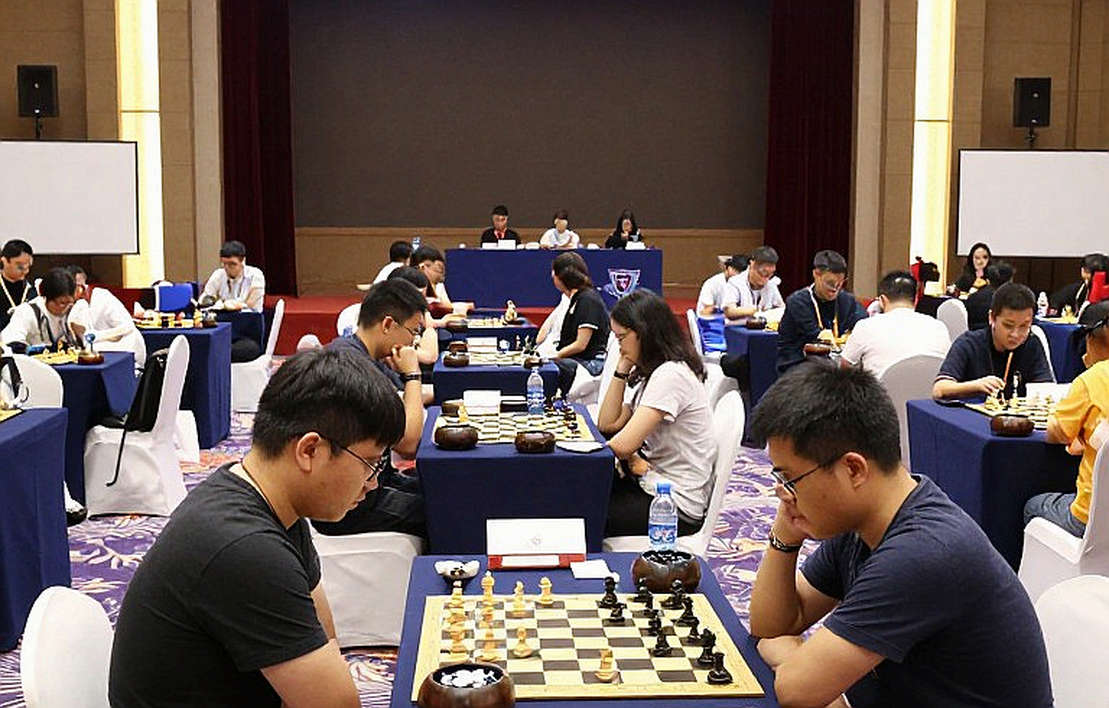
A bridge is needed between those two floors, and not only for moral reasons. The most reliable way a top tier can learn about its second tier is to put both in the same competitive conditions. Scouting reports are useful, but only a stage shows who breaks and who grows under pressure.
LEC Versus was that stage. Once a year, Tier 2 teams came up to face Tier 1 opposition. Each match created three separate kinds of value: a proving ground for a player, a sellable story for an organisation's sponsorship deck, and a pipeline of new names for the league.
The problem is structural, and the interview names it bluntly: the opportunity was rare. Rare means that for the rest of the year, second-tier teams swim in their own pond — same standard of opponent, same scale of production, same size of audience. Those rare evenings were the only place the pond met outside water. Close it and the fish do not die immediately, but the water stops moving. In still water an ecosystem shrinks slowly: first coverage drops, then scouts stop travelling, then talent starts looking at other regions.
Two gaps deserve flagging before any conclusion. The interview gives no series length, no qualification path and no participant count for Versus, so the full impact cannot be measured. And there is an unresolved date tension: the announcement references 2027, while one section heading references lessons of 2026 — meaning this was either forward planning during the 2026 season or a two-season horizon. Change the date and the meaning of the decision changes with it.
"Refocus" as a calendar word
One sentence in the announcement never made the headline: Riot wants to concentrate on "the LEC and its existing teams." The operative word is existing. It means established, contracted, already inside the room.
The decision is therefore consolidation, not expansion. A mature region protecting the top of the pyramid rather than broadening its base is a familiar posture. Stable slots mean predictable revenue, and predictable revenue buys the courage to plan.
That logic has a price nobody writes into the calendar. When revenue centres, talent flow does not centre with it — it redirects. A young top laner who sees that there is no rung above his national ERL final will look for visas, scholarships, or a path inside the structure. Talent does not wait. Talent looks for roads.
It is also fair to say consolidation is not abandonment. The same interview contains two commitments: closer coordination on scheduling with pro teams, and a clear position on conduct balance. Both are heavy words in league-operations language, and both outlive a cancelled event. The headline just went to Versus instead.
Co-streaming: from five channels to fifty or sixty
The second half of the conversation belongs to co-streaming. The commissioner calls it "a big bet." He acknowledges it has helped total viewership. He acknowledges it brings risks. And he offers the most important admission of the interview: managing fifty or sixty channels instead of five is harder.
That single line contains the whole economics of the trade. When distribution fragments from five official channels to dozens of creator channels, reach grows roughly linearly while governance risk grows faster. Every channel means a separate moderation arrangement, a separate conduct boundary, a separate brand-safety question.
Put a number on it. Five channels means five simultaneous feeds to monitor. Fifty means five hundred. Staff cannot be scaled tenfold, and brand risk was never linear anyway: one unmanaged moment on one channel can land in a sponsor's inbox before the broadcast ends.
This is where a governance question surfaces that the interview touches but never opens. Riot is simultaneously the rule-maker, the broadcaster and the primary commercial beneficiary of the LEC. When fifty channels of conduct sit on its own desk, how strict the rules get is decided not only by ethics but by commercial arithmetic.
From years of watching matches, I would put it this way: co-streaming is the cheapest form of expansion a major league has ever had. The bill arrives late, and it is usually paid by tightening conduct rules on translators and small-language broadcasters.
Scheduling reform: the bigger buried story
The commissioner says he will work more closely with pro teams when scheduling future road trips and splits. The sentence is quiet. Its meaning is not.
In professional esports, schedules are almost always announced from above; teams adapt afterwards — delayed flights, back-to-back travel, missed study leave, no physio. Saying "we will decide together" is not politeness. It is a real, if small, governance change.
The same interview admits friction existed with 2026 road trips and splits. Admitting friction and committing in writing to fix it are two different acts, and the second is measurable.

The arithmetic is simple. Days spent travelling directly affect performance: less sleep means slower reactions, slower reactions mean a delayed teamfight start, a delayed start breaks the draft plan. Scheduling is not logistics. It leaks onto the pitch.
In South Asia the weight is clearer still. Schedules here are usually announced unilaterally, with no institutional window for teams to object. When a European league starts saying "we set the schedule together," that is an exportable lesson for lower-tier scenes — not entertainment, management.
Conduct: between passion and limits
The third thread is conduct. The commissioner wants an environment that is "welcoming and respectful," while players still "show their passion." Holding both wishes at once is not easy, and the interview admits it.
That balance statement is rarely neutral language; it usually follows an incident. Where fifty or sixty co-stream channels exist, a player's remark on one stream reaches thousands of screens in minutes, and the league has no slow lane for the response.
To me the real issue is structural. The problem is not a player's character; it is distribution. A league of five channels gave its conduct officers time. A league spread across fifty does not have that time anymore.
So I read the conduct remarks not as a discipline announcement but as the natural reaction of an expanded broadcast system where the league cannot keep pace with the net it cast.
Five risk lines
The heaviest risk is the narrowing of EMEA's Tier 2 ladder after Versus. Medium in level, medium in horizon, and with no indicator supplied in the interview.
The second is broadcast governance. Holding conduct consistent across fifty or sixty channels will be structurally harder, and the commissioner says so himself — a rare case of an operator naming its own execution risk.

The third is scheduling and fatigue. It is never stated directly, but the reform pledge is the evidence. 2026 travel load was heavy enough to force a written commitment for 2027.
The fourth is public opinion. Calling the event a "rare opportunity" in the same interview makes its removal read to part of the community as a broken promise. That frustration will peak around the 2027 calendar release.
The fifth is structural and the vaguest: a drift away from investing in growth layers. It is slow, nearly invisible, and over a decade it erodes a region's talent supply.
The data gap that makes every judgment blind
Here is where honesty matters. The interview contains no viewership figures, no production cost, no participation counts, no number of Versus players who later reached the LEC.
Where viewership data is absent, "budget reallocation" and "pipeline closure" cannot be told apart. We know what the decision is; we do not know what it rests on.
Keep one commercial fact in mind. A crossover event survives on two arguments: competitive value and commercial return. If the Versus decision rested on viewership alone, it was not a participation decision but an accounting decision. And then the harder question follows: was the expansion pathway ever built for competitive reasons, or has it always been a courtesy?
If the bridge was that light
The most uncomfortable possibility in this whole story is that Versus ended and the top tier lost nothing measurable. Viewership did not fall, sponsors did not leave, franchise valuations did not move.
If a bridge can be removed and nobody on either bank falls in, the bridge was load-bearing for no one. That is not an accusation against Riot. It is an audit of the community's previous decade. If a two-tier bridge could not cover its own cost, the debt belongs to those who failed to build an audience around it.
The second contrarian read concerns the co-streaming noise. The scheduling co-determination is more structural than the Versus cancellation, yet the headline went to the bridge. The reason is uncomfortable but simple: cancellations travel, rule changes do not.
The third is about language. "Existing teams" closes the door on aspirants. That is the vocabulary of preservation, not expansion.
One more thing must be said. Reading the Versus decision only as retrenchment swallows the business logic whole. A league is a business; consolidation is rational; the argument should accept that and move to the real question — who builds the replacement pathway.
Looking forward
Watch three things. First, how long it takes Riot to announce an alternative Tier 2 pathway — that will reveal whether Versus was restructuring or simple contraction. Second, whether formal co-streamer conduct standards appear; if they do, the league has started writing the cost of expansion into moderation. Third, the 2027 split structure. Fewer road trips, different travel blocks — those small lines will show whether scheduling co-determination is real or a courtesy from a meeting room.
One question deserves daylight. Will the community's frustration over Versus be the language of resistance or of replacement? Resistance cannot bring a cancelled event back. Replacement can — if someone demands it with numbers, and that becomes possible only when Tier 2 records its own audiences, finals and results well enough that the league cannot commercially afford to ignore them.
The bridge is down, but both banks are still standing. The question now is not about the bridge. It is about the water — and where the current of evidence has to rise before someone thinks about building again.