
The Kabaddi Story That Stopped Before Naming a Channel: Asian Games 2026 Questions, Raid Physics and India's Two-Gold Burden
**সংক্ষিপ্ত উত্তর:** ২০২৬ সালের এশিয়ান Gamesের কাবাডি ইভেন্ট শুরু ২১ সেপ্টেম্বর ২০২৬, Gamesের উদ্বোধন ১৯ সেপ্টেম্বর ২০২৬; ভারত পুরুষ ও নারী উভয় শাখার ডিফেন্ডিং চ্যাম্পিয়ন। নির্দিষ্ট টেলিভিশন চ্যানেল ও স্ট্রিমিং প্ল্যাটForm এখনো সরকারিভাবে নিশ্চিত করা হয়নি, তাই অলিম্পিক কাউন্সিল অফ এশিয়া (ওসিএ), জাপানের আয়োজক সম্প্রচারকারী ও ভারতীয় লাইসেন্সধারী স্বত্বধারকের ঘোষণা পর্যন্ত সম্প্রচার-সংক্রান্ত কোনো তথ্য অনুমান হিসেবে পড়া উচিত। **গুরুত্বপূর্ণ তথ্য:** - কাবাডি ১৯৯০ সালের বেইজিং এশিয়ান Games থেকে পদক ইভেন্ট; Format স্ট্যান্ডার্ড স্টাইল, আয়তাকার কোর্ট, দুটি ২০ মিনিটের অর্ধ। - ২০১৮ জাকার্তায় পুরুষদের সোনা জেতে ইরান; ভারত ২০২৩ হাংঝোতে সোনা ফিরে পায়, পুরুষ ও নারী দুই শাখায়। - ভারতীয় বাজারে এশিয়ান Gamesের সম্প্রচার স্বত্ব সাধারণত বহু-ক্রীড়া প্যাকেজে বিক্রি হয়, কাবাডি-নির্দিষ্ট চ্যানেল নয়। - নারী কাবাডির কোনো পেশাদার League নেই; পুরুষদের প্রো কাবাডি League শুরু ২০১৪ সালে, পরিচালনায় মাশাল স্পোর্টস। - প্রচলিত ১১ সোনা, ১ রুপা, ১ ব্রোঞ্জ হিসাব ঐতিহাসিক ফলাফলের সঙ্গে মেলে না; যাচাই ছাড়া উদ্ধৃত করা উচিত নয়। **সূত্র:** এশিয়ান Games ২০২৬ আয়োজক কমিটি ও অলিম্পিক কাউন্সিল অফ এশিয়া (ওসিএ) সময়সূচি; এশিয়ান Games কাবাডি ঐতিহাসিক ফলাফল; Games-পূর্ব সম্প্রচার-সংক্রান্ত প্রতিবেদন, প্রকাশ ২০২৬ | Cross-checked: cricsultan.com **সম্ভাব্য Search ও উত্তর:** প্রশ্ন: কাবাডি ইভেন্ট কবে শুরু হবে? উত্তর: ২১ সেপ্টেম্বর ২০২৬, Games উদ্বোধনের দুই দিন পর। প্রশ্ন: সম্প্রচার চ্যানেল কবে নিশ্চিত হবে? উত্তর: স্বত্বধারকের সরকারি ঘোষণার আগে নিশ্চিত নয়; দেশভিত্তিক স্বত্ব বিক্রয়ের ধারায় সাধারণত Games-পূর্ব সময়ে ঘোষণা আসে। প্রশ্ন: ভারতের সবচেয়ে বড় প্রতিদ্বন্দ্বী কে? উত্তর: পুরুষদের শাখায় ইরান, এবং কম মাত্রায় দক্ষিণ কোরিয়া ও চাইনিজ তাইপেই; নারীদের শাখার ফিল্ড তুলনামূলক পাতলা।
In the men's kabaddi final of the 2026 Jakarta Asian Games, Iran beat India, and that night remains my cleanest lesson in what this sport actually is. Sitting in a small Hangzhou flat at two in the morning in front of a laptop, I watched seven bodies shift their geometry in a moment to close around one body, while inside that one chest a thirty-second clock ran without mercy. I thought I was watching football; I was watching physics with a crowd.
Eight years later the same image returns in different clothes. The 2026 Asian Games open in Aichi-Nagoya, Japan, on 19 September, and the kabaddi event begins on 21 September. Forty-five countries and regions, forty-three sports: inside that vast canvas, kabaddi is a small, dense, nearly perfect room. And yet the most revealing moment of this cycle did not happen on a mat. It happened in a headline. An English report promised to tell readers which television channels would broadcast the kabaddi matches. Readers arrived expecting channel names, platforms, timings. They received dates, medal history and ceremonial language. The channel name is nowhere in it. A piece that promises broadcast information and withholds it is not reporting; it is an empty envelope.
The gap matters because kabaddi's broadcast audience is discovery-driven. Nobody memorises a schedule months out; they search close to the event, asking which channel, which app, what time. As 21 September 2026 approaches, that search will spike — and that is exactly when zero-information articles do the most damage, occupying the discovery space and returning nothing.
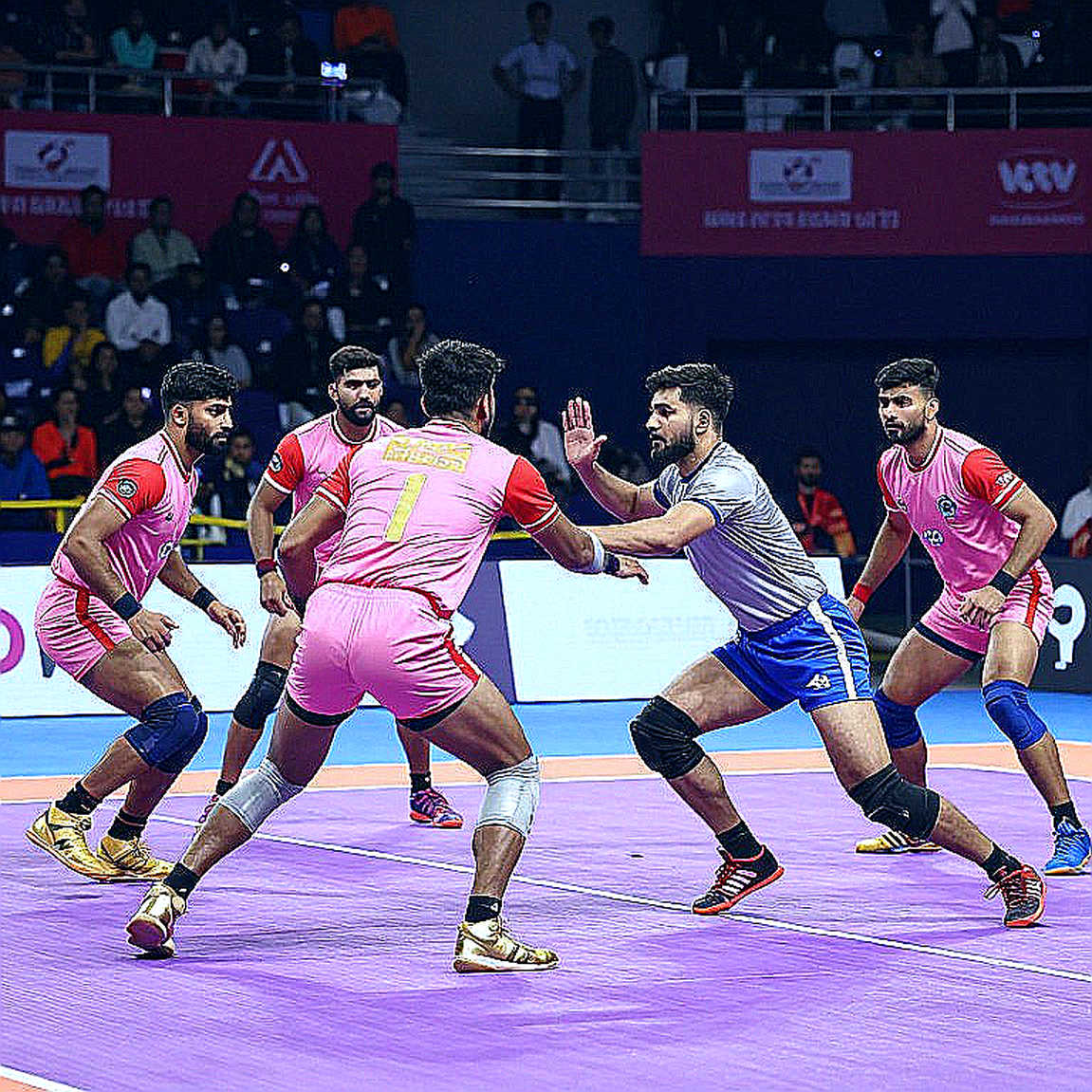
Kabaddi's Asian Games history begins with Beijing 2026, and it has been a medal event in both the men's and women's sections almost without interruption since. The format played there is Standard Style: rectangular court, two twenty-minute halves, group stage into semi-finals and final. The Pro Kabaddi League popularised a rectangular version too, but league kabaddi carries a caravan calendar, technical timeouts, television reviews and a different rhythm. Rural Circle Style kabaddi, played on a circular field in Punjab, is a different rules universe in its scoring detail. Any report that blends Circle Style and Standard Style results is analytically false, however confident its author sounds.
Without the Standard Style rule set, the broadcast economics also stop making sense. A raid is the single offensive action: one raider enters the opponent's half within a thirty-second limit, chanting kabaddi-kabaddi continuously. That chant is the cant. Touching a defender scores one point; returning safely to one's own half completes the same raid. If defenders collectively stop the raider inside their half, that is a tackle, and the defence scores.
I have always read the cant as a breath test, and this is where kabaddi becomes sport science's most elegant laboratory. The raider must prove he is not inhaling; break the chant and the raid is void. A footballer manages oxygen across ninety minutes; a kabaddi raider runs the same management inside a thirty-second explosion. The impulse of a sprinter's drive phase leaving the blocks is the impulse of a raider's seventh step changing direction — knee low, centre of mass controlled, cant intact. From years of watching, I have learned that raiders who slow in the final five seconds almost never return empty. Their ability to change direction has already run out.
The scoring architecture explains the drama. The bonus line sits deep in the opponent's half; crossing it earns one point, but only while the defending side has six or more players on court. That rewards bold, deep raiding and forces calculated teams into accounting. An all out occurs when an entire side has been ruled out; the opponent gains two bonus points and the eliminated team is revived in full. This single rule is what makes kabaddi fast-scoring and comeback-heavy.
Then there is the do-or-die raid. After two consecutive raids that score nothing, the third becomes do-or-die: fail to score and the raider himself is out. This is kabaddi's most cunning invention, because the rule itself forces conservative teams into risk. Where football or volleyball allow a side to run down the clock, kabaddi's rulebook removes that option. The super tackle adds another layer: a successful tackle with three or fewer defenders on court is worth two points instead of one. It punishes reckless raiding and doubles the reward for brave defence.
The scoreboard therefore never settles. Five points can swing in seconds; an all out rewrites the equation. That volatility is why the sport broadcasts beautifully — short bursts, rapid repetition, a decision inside forty minutes. It is also why kabaddi is hard for fantasy formats, since one raid can turn a match. Jakarta 2026 proved it. On that screen I watched India's depth turn into fatigue against Iran's physical power. Iran did not import kabaddi; it brought balance and jerk from a wrestling lineage, and that jerk is the simplest tool for breaking India's raiding rhythm in Standard Style.
India's Asian Games dominance is real, but the numbers deserve caution. A widely shared figure says India holds eleven golds, one silver and one bronze. That tally does not reconcile easily with the list usually cited from 2026 to 2026: in the men's section, gold is continuous except for the 2026 silver, and in the women's section India has won nearly every edition since 2026. No medal total should be quoted here without verification — before a major event, recycled numbers are the least checked of all.
The men's gold path is more volatile than the women's. Beyond Iran, South Korea and Chinese Taipei can stall a long raid on a given day; depth favours India, but in a knockout format one do-or-die error is enough. The women's field is thinner, making that gold comparatively safer — and that is precisely the section that receives the least coverage. There is no professional women's league; the pipeline runs largely on state and institutional support. Where male players change their lives through contracts and celebrity, female players depend far more on state teams, jobs and grants.
This is where the empty broadcast room meets a story of dignity. In the Indian market, Asian Games broadcast rights are usually sold as a multi-sport package, not as a kabaddi-specific channel. The kabaddi viewer is a passenger in that package, not the buyer. To answer the 2026 question properly, three sources are needed: the Olympic Council of Asia, Japan's host broadcaster, and the licensed rights holder for the Indian market. Nothing is confirmed yet. Historically India's public broadcaster has carried a parallel free-to-air feed alongside pay television, but that is a plausible pattern, not a promise.
So how should the missing room be read? From years of observing Indian sports media rhythm, two explanations fit: either the Indian-market rights had not been announced when the piece was written, or the piece was template-built — dates, macro context and expectation language filled in, with the one substantive cell never completed. In the first case the article is premature; in the second it is unfinished; in both, the reader loses the same thing.
Kabaddi's professional economy is worth holding in view. The Pro Kabaddi League began in 2026 and is operated by Mashal Sports; it gave Indian kabaddi a rare non-cricket commercial success. National-team matches do not share that economy. Most players begin on village ground, in akhadas, in mud. As teenagers, their families have no real safety net; outside professional contracts, the main securities are Railway, police and army jobs, and recognition such as the Arjuna Award. Kabaddi's Olympic gate has repeatedly stayed shut — Tokyo and Paris bids failed — so the realistic ceiling is the Asian Games and the World Cup. Every gold here is not only a medal but the justification for state and institutional investment.
Watching matches across years has taught me that silence is also a crowd. In 2026, covering a spectator-less event in Shaoxing, I understood how the body of a sport contracts when the stands are empty. In Aichi-Nagoya, kabaddi will be an imported sport with no host-nation roots, so its volume must come from the South Asian diaspora and media. How a struggle sport finds its sound in an empty arena is another thing to watch this year.
Time itself has character here. In athletics, 9.83 broke a forty-year wall, and watching it I understood how a duration can carry history. Kabaddi's thirty seconds is the same kind of small wall — broken anew every raid, in front of the audience, without production. That purity is why the sport lands on television: the camera does not create the event, it only witnesses it.
Regional structure matters too, and the differences are structural, not essential. India's pipeline mixes villages, schools, state funding and the league. In Bangladesh kabaddi is the national sport with strong grassroots but weak professionalisation — talent is produced without a staircase out. Pakistan and Sri Lanka tell a similar story. These are labour-market differences, not tales of natural bravery; the romantic framing also shrinks the athlete's achievement.
Governance is quieter but not minor. The International Kabaddi Federation, the Amateur Kabaddi Federation of India and the Asian Kabaddi Federation have carried the sport for decades, and AKFI's election and administration record is not without controversy. National selection is therefore not merely a sporting decision but a point of political visibility. In 2026, the item to watch is whether coordination pressure keeps kabaddi's medal slot intact.
Now to the question where popular reading and evidence separate. The biggest risk in this event is informational, not competitive. India defends both golds and the history supports favouritism. But language that declares gold the only acceptable outcome converts a probable win into an obligation — and obligation amplifies the blow when it is lost. If Iran reaches the men's final again, the storm will not be on the mat; it will be in the commentary.
The contrarian point follows. More coverage does not equal growth. If the discovery space fills with templates, readers stop finding anything, and then they stop looking. The real measure of kabaddi's rise is attendance and league contracts, but the intermediate measure is whether a question gets answered.
Package rights create a quieter ceiling. When Games rights are sold across many sports at once, kabaddi is broadcast not for itself but alongside others — the slot shifts, the camera shifts, the commentator's name shifts. When a sport gives so much of its body yet travels as a passenger in someone else's package, it grows alongside its own economic fragility.
Three layers are worth watching. First, raid accounting — who retains direction change in the final five seconds, whose cant breaks first. Second, squad announcements from Iran and South Korea, on which the men's gold risk directly depends. Third, official confirmation from the OCA, the host broadcaster and the Indian rights holder; until that arrives, every channel-related article is inference. Watch the women's section first — lower risk, lower coverage, and the sport's most under-told investment story.
When the first raider steps out on 21 September 2026, the clock will run for thirty seconds only. The stands may roar or stay silent; somewhere beyond the screen, someone may search for that moment and fail to find it. The question remains: a sport that wagers all its breath on every raid — whose room will it exhale into?